How to Negotiate Salary Without Making It Awkward
Missed opportunity
Most people accept the first offer
Even though employers often expect at least some negotiation.
Most people never learn how to negotiate salary properly. So they swing between two extremes: either they accept the first number immediately because it feels like the polite thing to do, or they swing the other way and become pushy.
Neither works. Salary negotiation isn't some power move. It's just a conversation that companies expect to have.
The real opportunities happen when you understand that negotiation is just alignment. The company has a budget. They want to know if you'll work there. You want to know if the number makes sense. That's it.
A strong resume gets you in the room. But the conversation after the offer is where you actually make money.
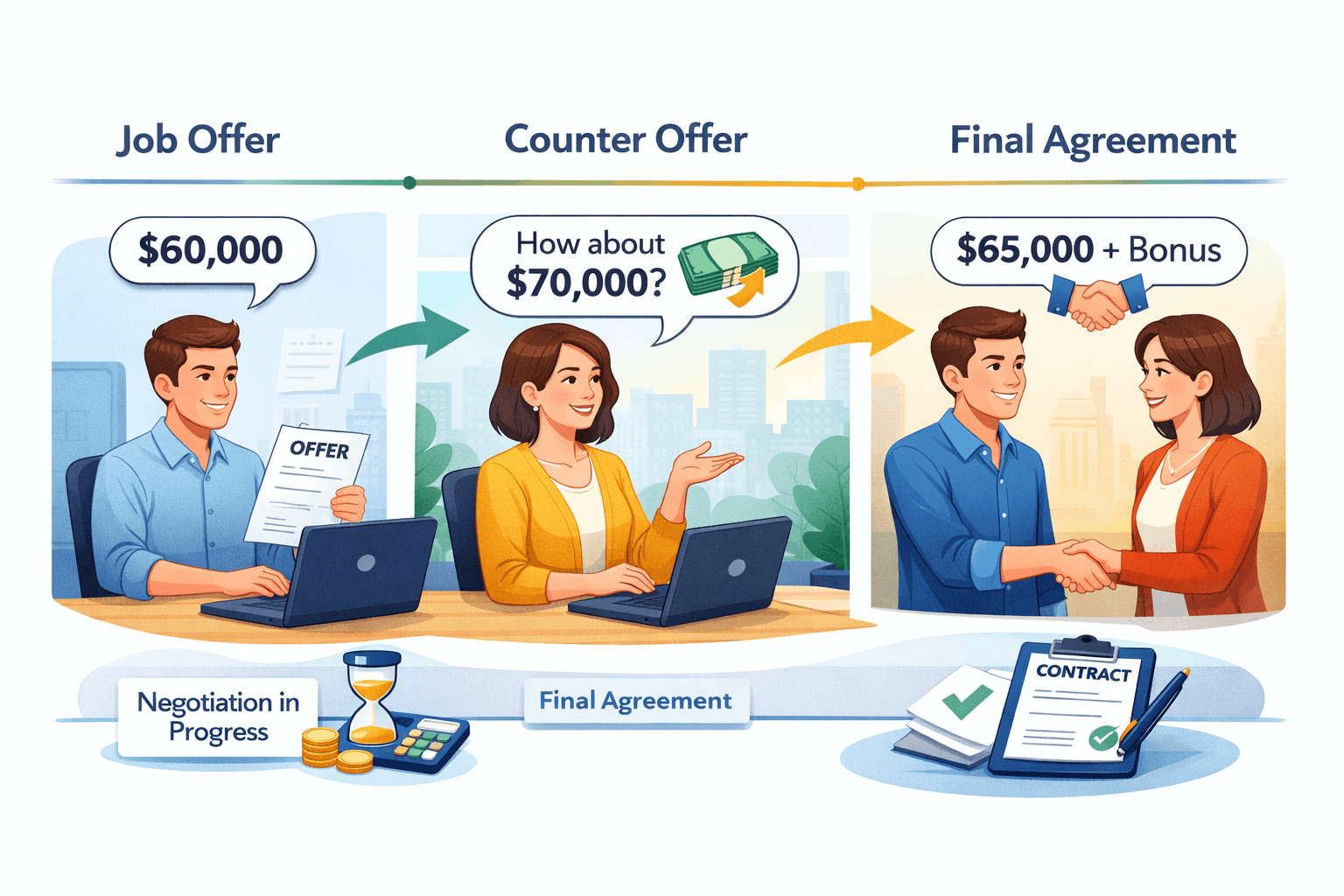
Negotiation is expected more often than candidates assume.
When you should actually negotiate
Wait for the offer. Not before.
Once they've sent the offer, everything's different. They've already decided. They've got budget. Now you're just talking about numbers in an existing range.
Bring it up early? You look unsure. Do it when the offer arrives? That's expected.
Don't accept immediately
Most people do. They get the offer, feel relief, say yes right away.
"Sounds good, I'm happy with that."
Then they wonder why they didn't get more. They just gave up their only leverage.
Instead, buy yourself a day. A few hours minimum. Say:
"Thanks, I'm interested. I want to review this properly and come back to you tomorrow."
That's it. No drama. Just time to think and respond clearly.
The actual ask
Don't overthink this. It's not complicated.
Keep it short. Don't write a novel about why you deserve it. Just be direct:
"Based on what I'm seeing in the market and my background, I was expecting €X – €Y. Can we discuss that?"
That's the whole thing. It gives them a reference point, shows you did your homework, and keeps it professional. No justifying your entire career.
What they're not telling you
That first number? Almost never the ceiling.
Companies approve a range first. Then they usually offer somewhere in the middle or lower, testing to see if you'll push. That initial offer isn't their max — it's their starting point.
When you negotiate, you're not asking them to break the budget. You're asking them to move up within the range they already allocated. It removes the anxiety when you realize that.
When they ask your expectations early
This is a test. They want to anchor you low or see if you've done your research.
Best move? Redirect:
"I want to make sure I understand the role fully first. What's your budget range for this position?"
Direct. Not rude. Flips the question back. Most of the time they'll tell you, and now you have actual data instead of guessing.
If they push, then give a range — but make sure it's based on research, not just a number you made up.
Salary isn't the only number
When salary itself is locked down, there's usually other stuff that moves:
- Signing bonus
- Extra vacation days
- Remote flexibility (full-time, partial, when?)
- Learning budget for courses/conferences
- Stock options or bonuses
- Performance review timing
Senior candidates treat the whole offer as negotiable, not just the base salary. If they say the salary is fixed, ask about signing bonus. If that's locked, ask about vacation. Something usually gives.
First job — still worth negotiating
Junior people often skip this because they think they have no leverage. Wrong.
Even at entry level, there's usually room. Maybe not a huge jump, but even 5-10% in year one compounds over time. And small improvements early in your career add up fast.
The key is not to be delusional about it. You're not senior yet, so don't ask for senior money. But you can still ask. The worst they say is no.
When they say no
Not every negotiation works. Sometimes the answer really is no.
When that happens, don't just accept and move on. Shift angles:
"Understood. Can we revisit compensation after my first review? If I'm performing well, can we discuss adjusting?"
That keeps it professional and creates an actual path forward. You're not accepting defeat. You're creating a timeline to try again.
Or ask about other parts of the offer. Or ask about bonus structure. Create movement somewhere else.
Why your resume actually matters here
Negotiation doesn't start at the offer. It starts with your resume.
A resume that shows actual results makes negotiation easier. It gives you ammunition.
Compare:
"Worked on backend services"
vs
"Reduced API latency by 35% by optimizing database queries"
One of these is actually an argument for more money. The other is just you saying you did stuff. That's why a well-built resume matters — it becomes your evidence when you negotiate.
Mistakes to avoid
Some patterns kill negotiations:
Accepting too fast. You're removing your leverage immediately.
Being passive. You ask once, get told no, and give up. Try again from a different angle.
Being too aggressive. You start making demands instead of having a conversation. Now they're defensive.
Ignoring everything else. Salary's locked? Ask for signing bonus, learning budget, remote flexibility, more vacation. There's usually room somewhere.
Over-justifying. You don't need to defend your entire career. One clear market comparison is enough.
Most people make these mistakes because they're nervous, not because they can't negotiate.
The actual bottom line
Salary negotiation isn't about perfect wording. It's about approach.
The candidates who actually get more money aren't the loudest ones. They're the ones who are clear, realistic, and willing to ask. That's the entire skill.
You won't lose the offer by negotiating professionally. Companies expect it. They've already decided they want you. Now they're just seeing if you know your worth.
If they say no, shift angles. Ask about other parts of the package. Ask to revisit in 6 months. Create a path forward instead of just accepting.
And you remember: your resume gets you the meeting. Your interview gets you the offer. But HOW you handle that offer often determines what you actually earn. That's worth getting right.
Want a resume that reads like this article?
Open the builder and polish your resume with a live A4 preview.